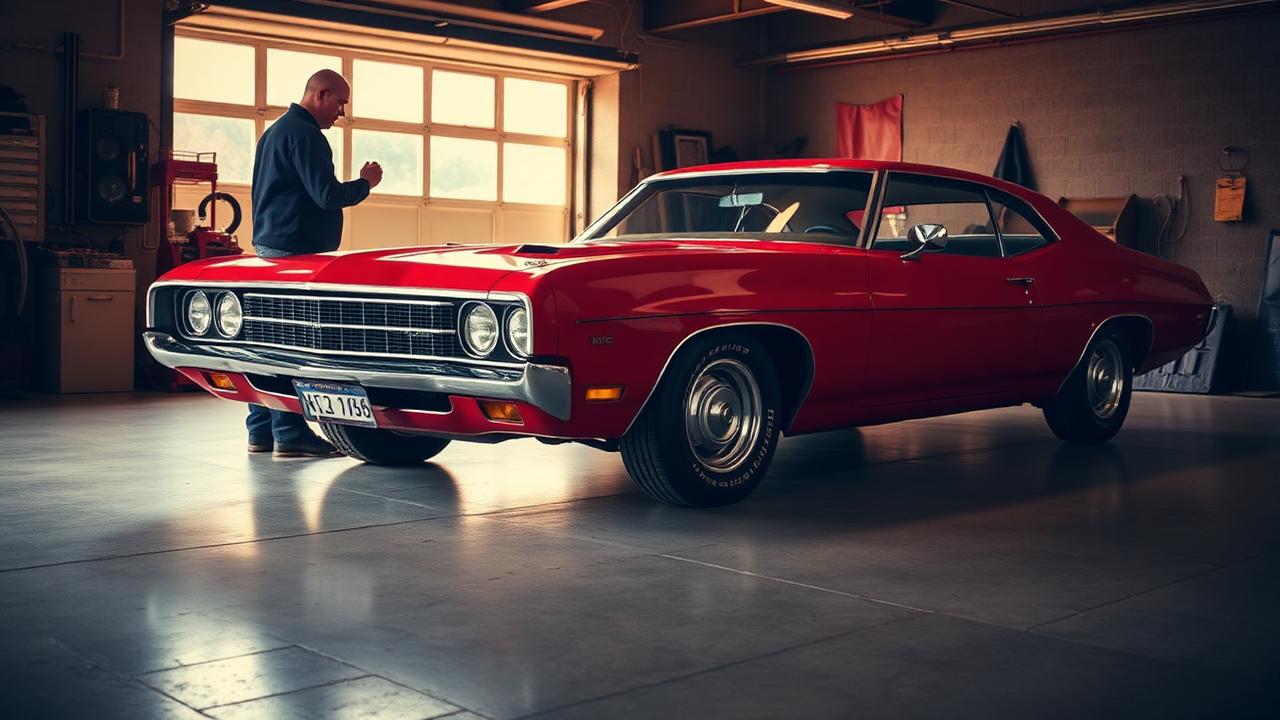
Featured image: Agreed value coverage protects collectible appreciation, not just market loss.
A surprising number of collector vehicle owners pay full price for a standard auto policy when a specialty classic car policy would cost 40 to 70 percent less and pay out substantially more at total loss. The reason the products are so different is that classic carriers like Hagerty, Grundy, American Modern, and J.C. Taylor underwrite for a different risk: a low mileage, well stored, garaged investment, not a daily driver.
What qualifies as a classic for insurance purposes
Each carrier writes its own definition, but common requirements include:
- The vehicle is at least 20 to 25 years old for standard classic, or any age for certain modified, exotic, and modern collectible programs.
- The vehicle is garaged when not in use.
- The vehicle is not used for daily commuting or rideshare.
- Annual mileage is capped, typically at 2,500 to 7,500 miles depending on the carrier and tier.
- The household has at least one regular use vehicle on a standard policy.
Modern collector programs cover supercars, low production trims, and even modified late model vehicles, so do not assume your 2018 Porsche or modified Mustang does not qualify.
Why agreed value is the centerpiece
A standard auto policy pays actual cash value at total loss, which is whatever the carrier decides the vehicle was worth on the day of the claim, minus depreciation. That is fine for a daily driver. It is a disaster for a collector vehicle that has appreciated.
A classic policy pays agreed value: a number you and the carrier sign off on at issue, usually backed by recent comparable sales, an appraisal, or the carrier's valuation database. If a documented $58,000 1970 Chevelle SS is totaled, you receive the full $58,000, not a depreciated estimate.
Update the agreed value at every renewal. Collector markets move fast, and a stale agreed value is the most common claim disappointment.
Mileage limits and how strict they really are
Carriers offer tiers like 2,500, 5,000, 7,500, and unlimited mileage. Going over the limit does not automatically void the policy, but it can:
- Reduce the claim payout proportionally.
- Force you onto a higher tier at renewal.
- In rare cases, trigger non renewal.
Track mileage with a simple notebook in the glove box. Most carriers ask for a current odometer reading at renewal.
Storage and use rules that matter
Read the use clause carefully. Common rules include:
- The vehicle must be garaged in a locked, fully enclosed structure.
- Pleasure use, club events, parades, and shows are allowed.
- Daily commuting, errands, and business use are typically excluded.
- Some carriers require an alarm or tracking device above a certain agreed value.
Violating a use rule and then having a claim is the fastest way to a denied claim in the entire auto insurance world.
Sample 2026 premium comparison
| Vehicle | Standard policy | Classic policy with agreed value |
|---|---|---|
| 1969 Chevrolet Camaro, $48,000 agreed value | $1,840 | $410 |
| 1990 Mazda Miata, $18,000 agreed value | $1,120 | $230 |
| 2002 BMW M3, $36,000 agreed value | $1,560 | $480 |
The savings come from low mileage, garaged storage, and the assumption that the vehicle is not used as a daily driver. For broader auto coverage planning across your whole household, see our coverage limits guide.
Quick takeaways
- Agreed value is the entire reason to buy a classic policy.
- Update the agreed value at every renewal as the market moves.
- Stay inside the mileage tier or upgrade before exceeding it.
- Garage the vehicle and keep one regular use car on a standard policy.
Final word
Classic and collector vehicles are the rare auto category where a specialist insurer will charge you less and pay you more. Get one quote from a classic carrier this week and compare it side by side with what your daily driver carrier wants to charge.
Related reading on InsureLab
Sources & further reading
Frequently asked questions
How old does a car have to be to qualify for classic insurance?+
Most carriers use 20 to 25 years as the threshold for standard classic, but modern collector programs cover late model exotics, low production trims, and modified vehicles at any age.
What happens if I drive over the mileage limit?+
Most carriers will not void the policy, but they can reduce the claim payout, push you to a higher tier at renewal, or non renew. Track mileage and request an upgrade if you are approaching the cap.
Can I use a classic car policy if the vehicle is my daily driver?+
No. Daily commuting, errands, and ride sharing are excluded under nearly every classic auto policy. The household must have at least one regular use vehicle on a standard policy.
Found this helpful?
Share it with a friend who's about to renew their policy — and browse our other guides while you're here.